

Publications
January, 2015
Publications
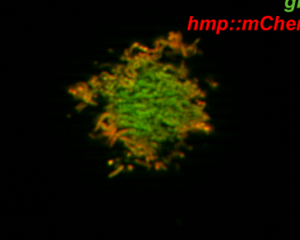
Community behavior and spatial regulation of Yersinia during microcolony formation in deep tissue sites
Bacterial pathogens express virulence-specific transcriptional programs that allow tissue colonization. Although phenotypic variation has been noted in the context of antibiotic exposure, no direct evidence exists for heterogeneity in virulence-specific transcriptional programs within tissues. In a mouse model of Yersinia pseudotuberculosis infection, we show that at least three subpopulations of bacteria develop within a single tissue site in response to distinct host signals. Bacteria growing on the exterior of spleen microcolonies responded to soluble signals and induced the nitric oxide (NO)-detoxifying gene, hmp. Hmp effectively eliminated NO diffusion and protected the interior bacterial population from exposure to NO-derived inducing signals. A third subpopulation, constituting the most peripherally localized bacteria, directly contacted neutrophils and transcriptionally upregulated a virulence factor. These studies demonstrate that growth within tissues results in transcriptional specialization within a single focus of microbial replication, facilitating directed pathogen counterattack against the host response.
December 2014
Publications
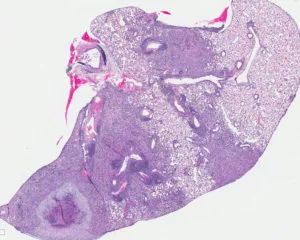
Bone marrow mesenchymal stem cells provide an antibiotic-protective niche for persistent viable Mycobacterium tuberculosis that survive antibiotic treatment
During tuberculosis (TB), some Mycobacterium tuberculosis bacilli persist in the presence of an active immunity and antibiotics that are used to treat the disease. Herein, by using the Cornell model of TB persistence, we further explored our recent finding that suggested that M. tuberculosis can escape therapy by residing in the bone marrow (BM) mesenchymal stem cells. We initially showed that M. tuberculosis rapidly disseminates to the mouse BM after aerosol exposure and maintained a stable burden for at least 220 days. In contrast, in the lungs, the M. tuberculosis burden peaked at 28 days and subsequently declined approximately 10-fold. More important, treatment of the mice with the antibiotics rifampicin and isoniazid, as expected, resulted in effective clearance of M. tuberculosis from the lungs and spleen. In contrast, M. tuberculosis persisted, albeit at low numbers, in the BM of antibiotic-treated mice. Moreover, most viable M. tuberculosis was recovered from the bone marrow CD271(+)CD45(-)-enriched cell fraction, and only few viable bacteria could be isolated from the CD271(-)CD45(+) cell fraction. These results clearly show that BM mesenchymal stem cells provide an antibiotic-protective niche for M. tuberculosis and suggest that unraveling the mechanisms underlying this phenomenon will enhance our understanding of M. tuberculosis persistence in treated TB patients.
May 2013
Publications
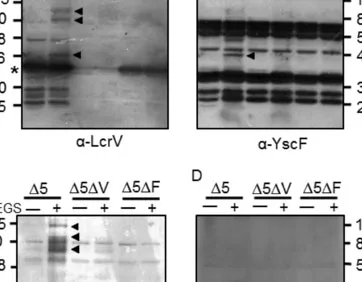
A mutant with aberrant extracellular LcrV-YscF interactions fails to form pores and translocate Yop effector proteins but retains the ability to trigger Yop secretion in response to host cell contact
The plasmid-encoded type three secretion system (TTSS) of Yersinia spp. is responsible for the delivery of effector proteins into cells of the innate immune system, where these effectors disrupt the target cells’ activity. Successful translocation of effectors into mammalian cells requires Yersinia to both insert a translocon into the host cell membrane and sense contact with host cells. To probe the events necessary for translocation, we investigated protein-protein interactions among TTSS components of the needle-translocon complex using a chemical cross-linking-based approach. We detected extracellular protein complexes containing YscF, LcrV, and YopD that were dependent upon needle formation. The formation of these complexes was evaluated in a secretion-competent but translocation-defective mutant, the YscFD28AD46A strain (expressing YscF with the mutations D28A and D46A). We found that one of the YscF and most of the LcrV and YopD cross-linked complexes were nearly absent in this mutant. Furthermore, the YscFD28AD46A strain did not support YopB insertion into mammalian membranes, supporting the idea that the LcrV tip complex is required for YopB insertion and translocon formation. However, the YscFD28AD46A strain did secrete Yops in the presence of host cells, indicating that a translocation-competent tip complex is not required to sense contact with host cells to trigger Yop secretion. In conclusion, in the absence of cross-linkable LcrV-YscF interactions, translocon insertion is abolished, but Yersinia still retains the ability to sense cell contact.