

Designing Microbial Therapeutics for Vaginal Health – Tufts University’s Fatima Aysha Hussain, PhD
May 29, 2025
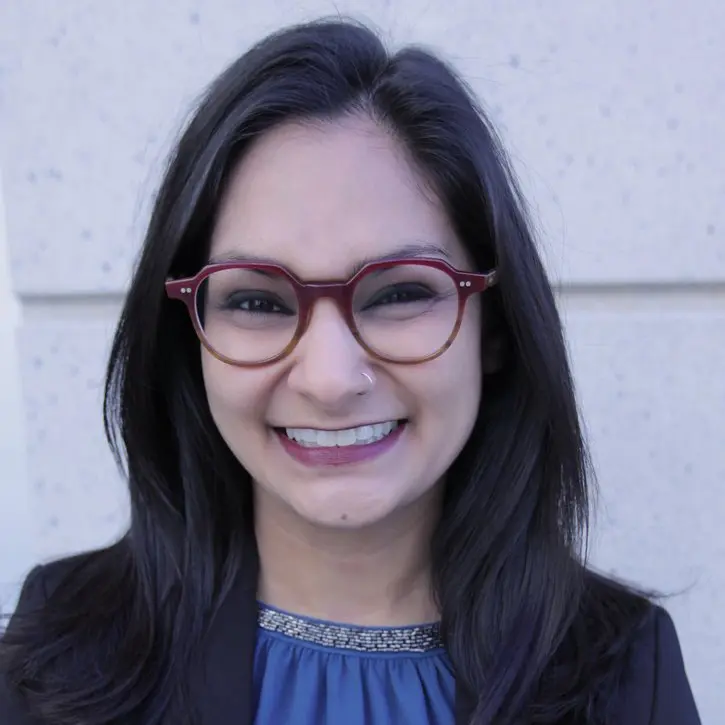
Please Join us for a Levy CIMAR seminar from Fatima Aysha Hussain, PhD, an Assistant Professor of Biology at Tufts studying the ecology and evolution of the vaginal microbiome. Dr. Hussain will present on “Designing Microbial Therapeutics for Vaginal Health” on May 29th at 12 noon in M&V 412 and by Zoom (details to come).
Dr. Hussain is interested in microbe-microbe interactions and phage-driven evolution of bacteria. She and her lab investigate how phages drive evolution of resistance in their hosts, how bacteriocins and other antimicrobial compounds shape the bacterial community, and how phage therapy might be leveraged in this ecosystem to treat microbial syndromes such as bacterial vaginosis. Dr. Hussain and team aim to use their work to design ecologically-informed microbial therapeutics for women’s health.
Previously, Dr. Hussain focused on clinical applications of this work—investigating the potential of newly-designed probiotics and vaginal microbiota transplantations to treat recurrent bacterial vaginosis.
You can learn more about Dr. Hussain and her lab via her website.
Dr. Williams’ research focuses on unraveling the molecular foundations that dictate the functions of intricate, yet structurally undefined, protein macromolecular machines. The Williams Lab uses X-ray crystallography, cryo-electron microscopy (cryo-EM) single molecule reconstruction, biochemical, genetic, and in vivo studies to probe fundamental aspects of bacterial physiology. Dr. Williams and team aim to influence drug development and, to that end, the fight against antibiotic drug resistance. You can learn more about the Dr. Williams and the Williams Lab here.
This talk will be hosted by Aimee Shen, PhD, PhD Candidate Elizabeth Tan, and Micro DEI, Additional details, including a Zoom link for those unable to attend in person, will be provided at a later date.
Clinical and Basic Science Perspectives on C. diff: “Evaluating the role of Clostridioides difficile clades and ribotypes on clinical outcomes and response to treatment,“ TMC’s Majd Soubani Alsoubani, MD, and “Defining the essential role of PBP1 in the non-canonical divisome of Clostridioides difficile,” Tufts University’s Greg Harrison, PhD
April 24, 2025
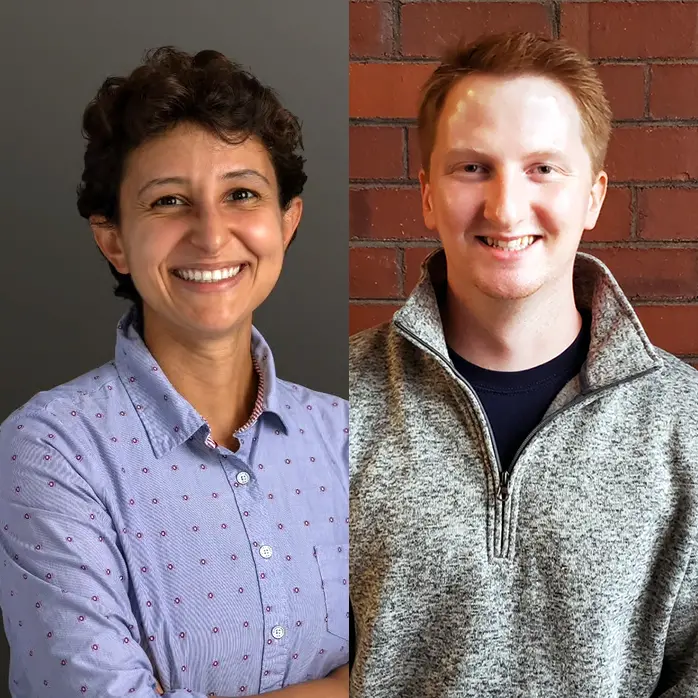
Our April 24th Levy CIMAR Science Seminar will explore C. difficile from both clinical and basic science perspectives. We will hear from two speakers this month: Tufts Medical Center’s Majd (Soubani) Alsoubani, MD, MPH, an Attending Physician with expertise in antimicrobial stewardship and infections in immunocompromised hosts, and Greg Harrison, PhD, a postdoctoral fellow in the lab of CIMAR’s Aimee Shen, PhD, studying the molecular machinery that is required for cell division in C. diff and working to identify novel therapeutic targets to combat this dangerous pathogen.
Please join us on Thursday, April 24th, at 12 noon in M&V 412 (4th floor, M&V Building, 136 Harrison Ave., Boston) and by Zoom (details to come).
Dr. Alsoubani will present on “Evaluating the role of Clostridioides difficile clades and ribotypes on clinical outcomes and response to treatment.“ The talk will include data on the impact of C. difficile strains on clinical outcomes.
Dr. Harrison will present on “Defining the essential role of PBP1 in the non-canonical divisome of Clostridioides difficile.” C. difficile carries out the essential process of cell division using a mechanism that is fundamentally different from previously studied bacteria, so this pathway could be a source of new species-specific therapeutic targets. This talk will explore Dr. Harrison’s work on understanding the molecular details of cell division in C. difficile, including the critical role of the enzyme PBP1.
- Clinical and Basic Science Perspectives on C. diff: “Evaluating the role of Clostridioides difficile clades and ribotypes on clinical outcomes and response to treatment,“ TMC’s Majd Soubani Alsoubani, MD, and “Defining the essential role of PBP1 in the non-canonical divisome of Clostridioides difficile,” Tufts University’s Greg Harrison, PhDApril 24, 2025
- Designing Microbial Therapeutics for Vaginal Health – Tufts University’s Fatima Aysha Hussain, PhDMay 29, 2025