

UN Meeting Highlights Antimicrobial Resistance “Epiphany”—Lack of Antibiotic Access Is a Key Driver

In 2021 alone, drug-resistant bacterial pathogens contributed to 4.71 million global deaths and were directly responsible for 1.14 million of those. And although these tolls were down slightly from 2019, researchers forecast a nearly 70% increase in the number of annual deaths directly attributable to AMR by midcentury, reaching 1.91 million in 2050. More than 39 million people, they predict, will die from antibiotic-resistant infections over the next 25 years. CIMAR’s Helen Boucher, MD, Dean of the Tufts University School of Medicine, has had the “sad duty” of treating patients affected by AMR, from an otherwise healthy young mother whose urinary tract infection ended up requiring a weeks-long hospital stay to a patient with heart failure whose bacterial infection wasn’t treatable.
Study Challenges Assumptions About How Tuberculosis Bacteria Grow
The rod-shaped tuberculosis (TB) bacterium, which the World Health Organization has once again ranked as the top infectious disease killer globally, is the first single-celled organism ever observed to maintain a consistent growth rate throughout its life cycle. These findings, reported by Tufts University School of Medicine researchers on November 15 in the journal Nature Microbiology, overturn core beliefs of bacterial cell biology and hint at why the deadly pathogen so readily outmaneuvers our immune system and antibiotics. “The most basic thing you can study in bacteria is how they grow and divide, yet our study reveals that the TB pathogen is playing by a completely different set of rules compared to easier-to-study model organisms,” says CIMAR’s Bree Aldridge, PhD, a professor of Molecular Biology and Microbiology and of Biomedical Engineering at Tufts University and an author of the paper.
You and Your Pet Can Share Resistance to Certain Medications. Here’s How.

People are in such close contact with their dogs, cats, and other pets that research shows they often share flora, or tiny bacteria and other microorganisms that inhabit the skin, gut, and even the environment of the home. If you or your pet take an antibiotic or another antimicrobial medication, it can potentially change the flora you both carry. And if your pet is carrying antimicrobial resistant bacteria, which may lessen the efficacy of prescribed medications, you may be, too. Small-animal veterinarians at the Tufts Cummings School of Veterinary Medicine are leading nationwide efforts to understand antimicrobial stewardship and resistance in companion animals.\n\n
How the Pandemic Gave Power to Superbugs: Tufts Dean Weighs In

Antibiotics cannot cure COVID. They don’t help a bit. And yet, new data shows that, during the pandemic, COVID patients were given antibiotics – a lot of antibiotics. That’s bad because the overuse of antibiotics can breed superbugs that are resistant to medications. The impact of this pandemic overuse has lingered even as the pandemic has faded. So how did this unfortunate turn of events come to be? A series of new reports and papers shed light. Globally, about 75% of patients hospitalized with COVID were given antibiotics, despite only 8% having a bacterial coinfection where antibiotics would be medically useful. This comes from new data published in late April that was collected through the World Health Organization’s Global Clinical Platform in 65 countries between January 2020 and March 2023.
Levy CIMAR’s New Research Hub to Tackle Antimicrobial Resistance

In a significant stride toward combating the global threat of antimicrobial resistance, Tufts University has launched the Laboratory for Combinatorial Drug Regimen Design for Resistant and Emerging Pathogens (LCDRD). Made possible by a $5.15 million grant from the National Institutes of Health, the new facility is housed within the Levy CIMAR and located on the 8th floor of Tufts’ Biomedical Research and Public Health Building on its Health Sciences Campus in Boston. The 2,500-square-foot lab is designed to foster collaboration among scientists, clinicians, and engineers from across Tufts University, Tufts Medicine, and national and international partners. Situated adjacent to Tufts’ BSL-3 lab and key research groups, it supports a uniquely interdisciplinary research environment with state-of-the-art investigative and safety amenities.
Exploring The Intersection Of Racism, Antimicrobial Resistance, And Vaccine Equity — UC San Diego’s Jacinda C. Abdul-Mutakabbir PharmD, MPH, AAHIVP
February 29, 2024
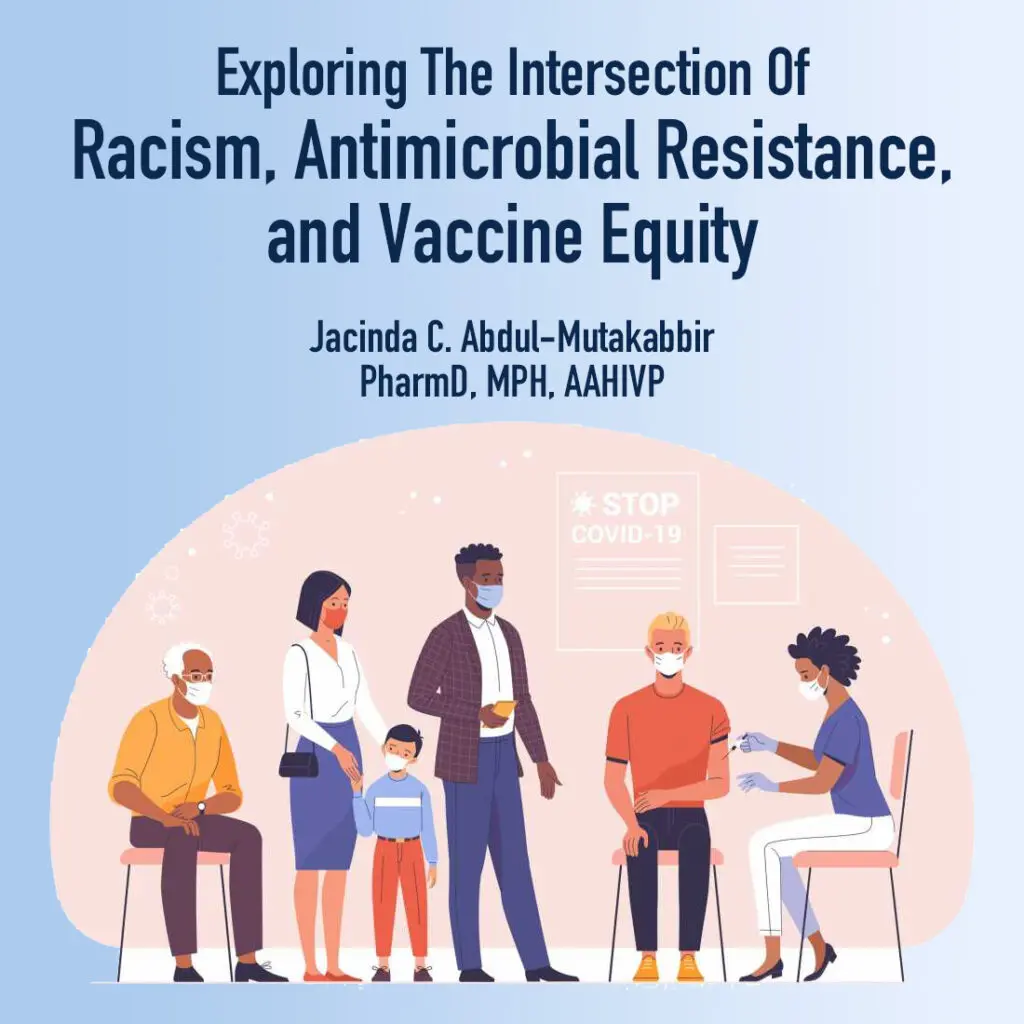
Dr. Jacinda Abdul-Mutakabbir explores the intersection of antibiotic resistance and health/vaccine equity, with a specific focus on racial differences observed across racially and ethnically minoritized groups.
Tufts Researchers Find Link Between Dog-Human Antibiotic Resistance
For many people, pets are family; just as close to them as the humans in their life. However, a new study suggests that closeness can create a concerning health issue making prescribed medicines less effective. …
IDSA announces Tufts Medical Center Among Recipients of Antimicrobial Stewardship Centers of Excellence Designation
The Infectious Diseases Society of America (IDSA) announced today the recipients of its Antimicrobial Stewardship Centers of Excellence (CoE) designation. …
CIMAR Featured in Spotlight on Research and Collaboration
Given an increasingly difficult funding climate, finding the research strengths of the university and focusing resources on those areas is a priority for Tufts. After a year-and-a-half consultative process involving researchers from across the university, five thematic priority areas emerged. …
CIMAR Joins the Battle Against AMR with Collaborative and Brainstorming Workshop
The Tufts Center for Integrated Management of Antimicrobial Resistance (CIMAR) hosted its first event last month to introduce the Center to the local scientific community and to offer a platform for investigators and clinicians to showcase their research and promote collaborations.
- Tufts Researchers Find Link Between Dog-Human Antibiotic Resistance
- IDSA announces Tufts Medical Center Among Recipients of Antimicrobial Stewardship Centers of Excellence Designation
- CIMAR Featured in Spotlight on Research and Collaboration
- CIMAR Joins the Battle Against AMR with Collaborative and Brainstorming Workshop
- Tufts Summer Programs Provide Research Opportunities for Undergraduates