

A New Era for Global Environmental Surveillance of Infectious Disease
Published
April 30, 2026
Source
Amy Pickering
Abstract
Special Issue: Published as part of Environmental Science & Technology special issue “60th Anniversary of Environmental Science and Technology”.
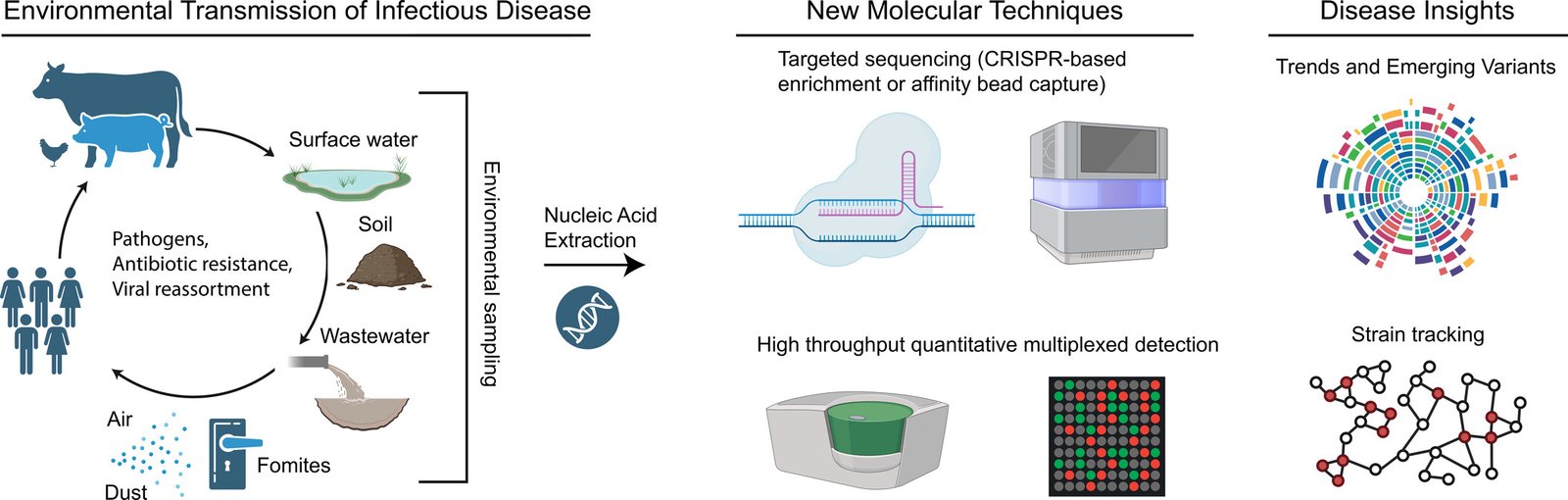
Infectious disease surveillance has historically been reactive: a human develops symptoms, seeks healthcare, and then waits for a clinician to order and report a test result. While essential for diagnosis and treatment, this model is skewed toward those with healthcare access and poorly suited for early detection of emerging threats. Environmental surveillance─the collection, analysis, and interpretation of data from environmental matrixes─offers a proactive alternative that captures community-level trends before they reach the clinic. By analyzing wastewater, fecal sludge, soil, surface water, fomites, air, and dust for pathogens, we can not only track population-level disease prevalence but also map environmental transmission pathways, providing critical insights to disrupt spread. For example, sampling of high touch surfaces and air during the COVID pandemic helped to establish that SARS-COV-2 was transmitted through air as well as to highlight the value of these sample types for surveillance. Beyond pathogen tracking, environmental surveillance serves as a broader window into the biological exposome, providing views into the full spectrum of environmental exposures that shape human health.
Keywords
digital polymerase chain reaction | environmental surveillance | infectious disease | pathogens | sequencing | wastewater
Posted by
Levy CIMAR