

Strain diversity drives heterogeneous responses to tuberculosis combination therapy
Published
May 15, 2026
Source
Michelle H Yoon, Peter H Culviner, Mariana Pereira Moraes, Hidetomi Nitta, Nguyen Thuy Thuong Thuong, Sarah M Fortune, Bree B Aldridge
Abstract
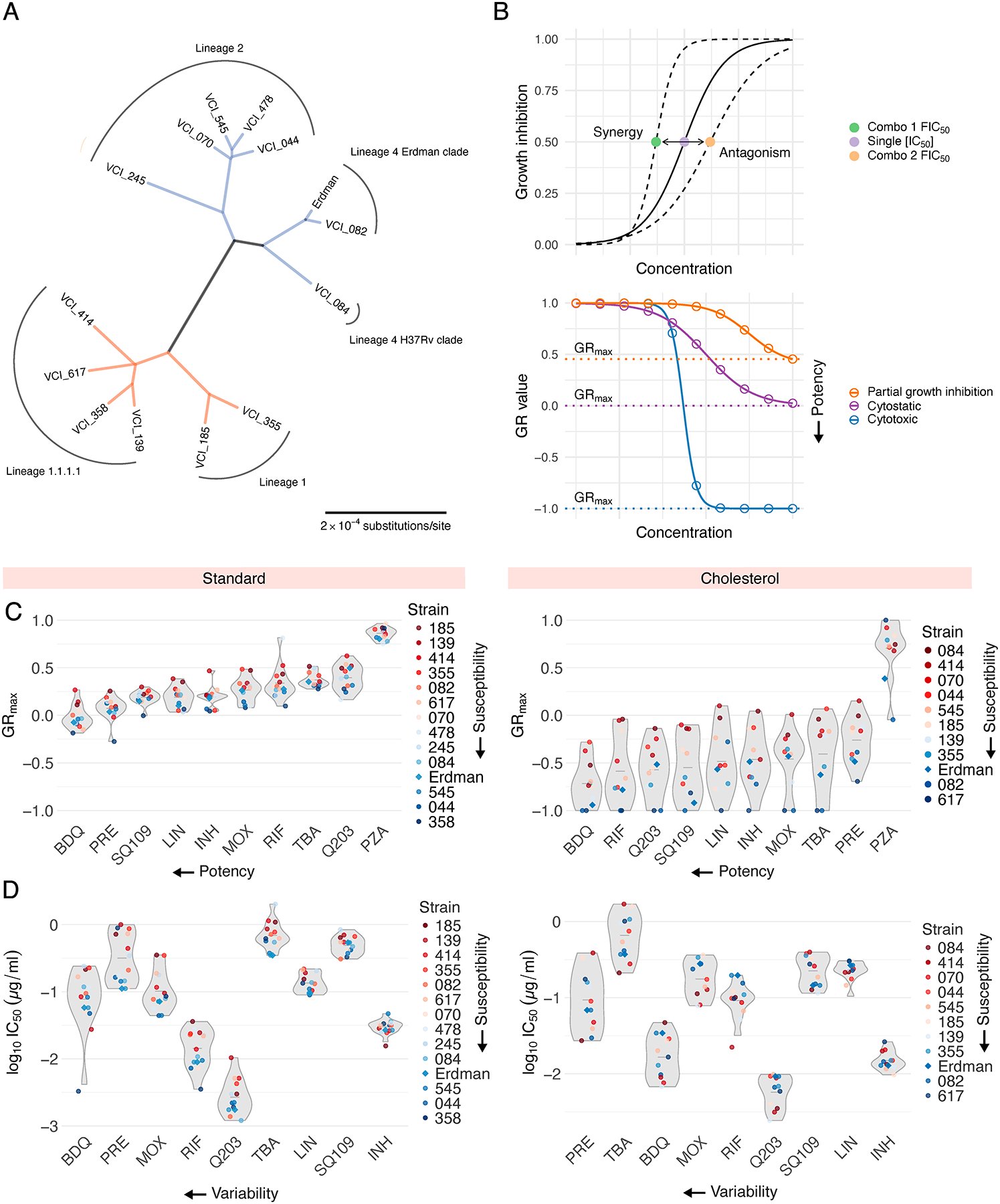
Strain diversity in Mycobacterium tuberculosis (Mtb) underlies distinct clinical presentations and outcomes, but the range of drug susceptibility phenotypes among clinical isolates is poorly understood. We aimed to identify drug response patterns in phylogenetically diverse clinical isolates to combination treatment. We selected 13 strains out of 641 drug-sensitive clinical isolates that capture local and global phylogenetic diversity and included Erdman ATCC-35801 as a reference. We treated each strain with 10 single drugs, 45 drug pairs, and 20 three-way combinations in standard and cholesterol-rich media. Mtb clinical strains displayed a broad range of drug response phenotypes across the 65 drug combinations and 2 metabolic conditions tested, with the most effective drug pairs (based on potency and synergy) varying by strain and metabolic condition. Within our 14-strain panel, strains that were less sensitive to single drugs were also less sensitive to combination treatment, with very few exceptions. For all drug combinations tested, the variation in combination potency was driven primarily by variation among genetically related strains, rather than between strains belonging to disparate lineages. Preclinical regimen design should reflect the diversity of Mtb clinical strains; our data suggest that selecting strains based on the range of drug response phenotypes displayed, rather than by genetic diversity alone, may better account for pathogen diversity. Our findings also show that constituent drug pairs of high-order combinations can be differentially effective against Mtb adapted to different carbon sources. Selection of these pairs should likely involve multiple factors including the infecting strain, metabolic niche, and drug response metrics.
Keywords
clinical isolates | drug combinations | Mycobacterium tuberculosis
Posted by
Levy CIMAR