

Streptococcus pneumoniae favors tolerance via metabolic adaptation over resistance to circumvent fluoroquinolones
Published
January 9, 2024
Source
Tina H. Dao, Haley Echlin, Abigail McKnight, Enolia S. Marr, Julia Junker, Qidong Jia, Randall Hayden, Tim van Opijnen, Ralph R. Isberg, Vaughn S. Cooper, Jason W. Rosch
Abstract
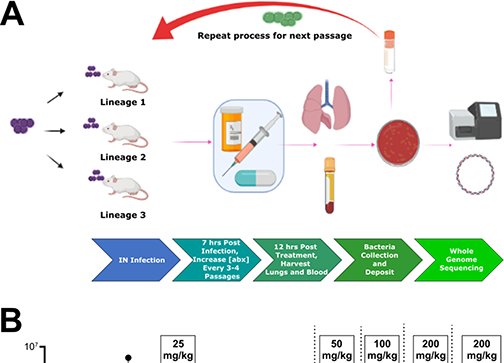
The increasing prevalence of antibiotic resistant bacteria is a major global health concern. While many species have the potential to develop antibiotic resistance, understanding the barriers to resistance emergence in the clinic remains poorly understood. A prime example of this is fluroquinolone resistance in Streptococcus pneumoniae, whereby, despite continued utilization, resistance to this class of antibiotic remains rare. In this study, we found that the predominant pathways for developing resistance to this antibiotic class severely compromised the infectious capacity of the pneumococcus, providing a key impediment for the emergence of resistance. Using in vivo models of experimental evolution, we found that S. pneumoniae responds to repeated fluoroquinolone exposure by modulating key metabolic pathways involved in the generation of redox molecules, which leads to antibiotic treatment failure in the absence of appreciable shifts in resistance levels. These data underscore the complex pathways available to pathogens to evade antibiotic mediating killing via antibiotic tolerance.
Keywords
antibiotic resistance | Streptococcus pneumoniae | virulence
Posted by
Levy CIMAR