

Molecular Regulatory Mechanisms Drive Emergent Pathogenetic Properties of Neisseria gonorrhoeae
Published
April 28, 2022
Source
Ashwini Sunkavalli, Ryan McClure, Caroline Genco
Abstract
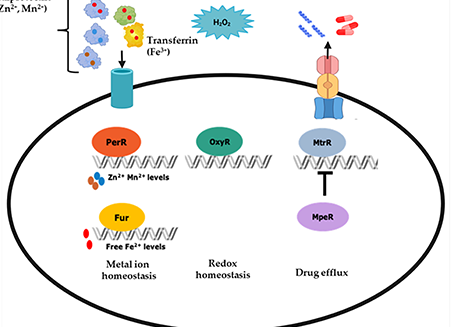
Neisseria gonorrhoeae is the causative agent of the sexually transmitted infection (STI) gonorrhea, with an estimated 87 million annual cases worldwide. N. gonorrhoeae predominantly colonizes the male and female genital tract (FGT). In the FGT, N. gonorrhoeae confronts fluctuating levels of nutrients and oxidative and non-oxidative antimicrobial defenses of the immune system, as well as the resident microbiome. One mechanism utilized by N. gonorrhoeae to adapt to this dynamic FGT niche is to modulate gene expression primarily through DNA-binding transcriptional regulators. Here, we describe the major N. gonorrhoeae transcriptional regulators, genes under their control, and how these regulatory processes lead to pathogenic properties of N. gonorrhoeae during natural infection. We also discuss the current knowledge of the structure, function, and diversity of the FGT microbiome and its influence on gonococcal survival and transcriptional responses orchestrated by its DNA-binding regulators. We conclude with recent multi-omics data and modeling tools and their application to FGT microbiome dynamics. Understanding the strategies utilized by N. gonorrhoeae to regulate gene expression and their impact on the emergent characteristics of this pathogen during infection has the potential to identify new effective strategies to both treat and prevent gonorrhea.
Posted by
Levy CIMAR