

Fighting AntimicroBial Resistance in Carceral Settings (FABRICS) study on antibiotics prescribing in New England prisons
Published
Sept 25, 2025
Source
Emily D. Grussing, Nicole Cassarino, Rebecca A. Tenner, Shira Doron, Maureen Campion, and Alysse G. Wurcel
Antimicrobial Stewardship & Healthcare Epidemiology, Cambridge University Press;
September 25, 2025, 5, e235, 1–4
Abstract
ntimicrobial resistance (AMR) will be the leading cause of death worldwide by 2050 without systems to decrease unnecessary antibiotic prescribing. Reference O'Neill1 Efforts to optimize antibiotic prescribing have been reported in most healthcare settings, with the notable exception of
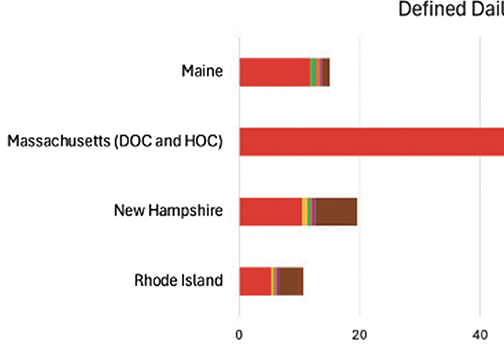
carceral settings. The United States' incarceration rates are higher than any other country's with approximately 2 million people detained in jails (for short-term confinement typically less than 1 year) and prisons (for longer term confinement) each year. Reference Dholakia2 People who are incarcerated experience higher rates of chronic diseases (eg, human immunodeficiency virus, asthma, diabetes mellitus) and mental health conditions (eg, depression, schizophrenia). Reference Dholakia2 People with chronic diseases are more likely to be prescribed antibiotics compared to their healthy counterparts. Reference Queen, Zhang and Sears3 Our research team published a report of antibiotic prescribing in 11 Massachusetts county jails, which showed heterogeneity between facilities. Reference Szewczyk, Tenner and Grussing4 The current study aims to benchmark antimicrobial use with states' prisons and comparing use in overall in New England.
Posted by
Levy CIMAR