

Cholesterol metabolism and intrabacterial potassium homeostasis are intrinsically related in Mycobacterium tuberculosis
Published
May 22, 2025
Source
Yue Chen, Berge Hagopian, Shumin TanÂ
Abstract
Abstract
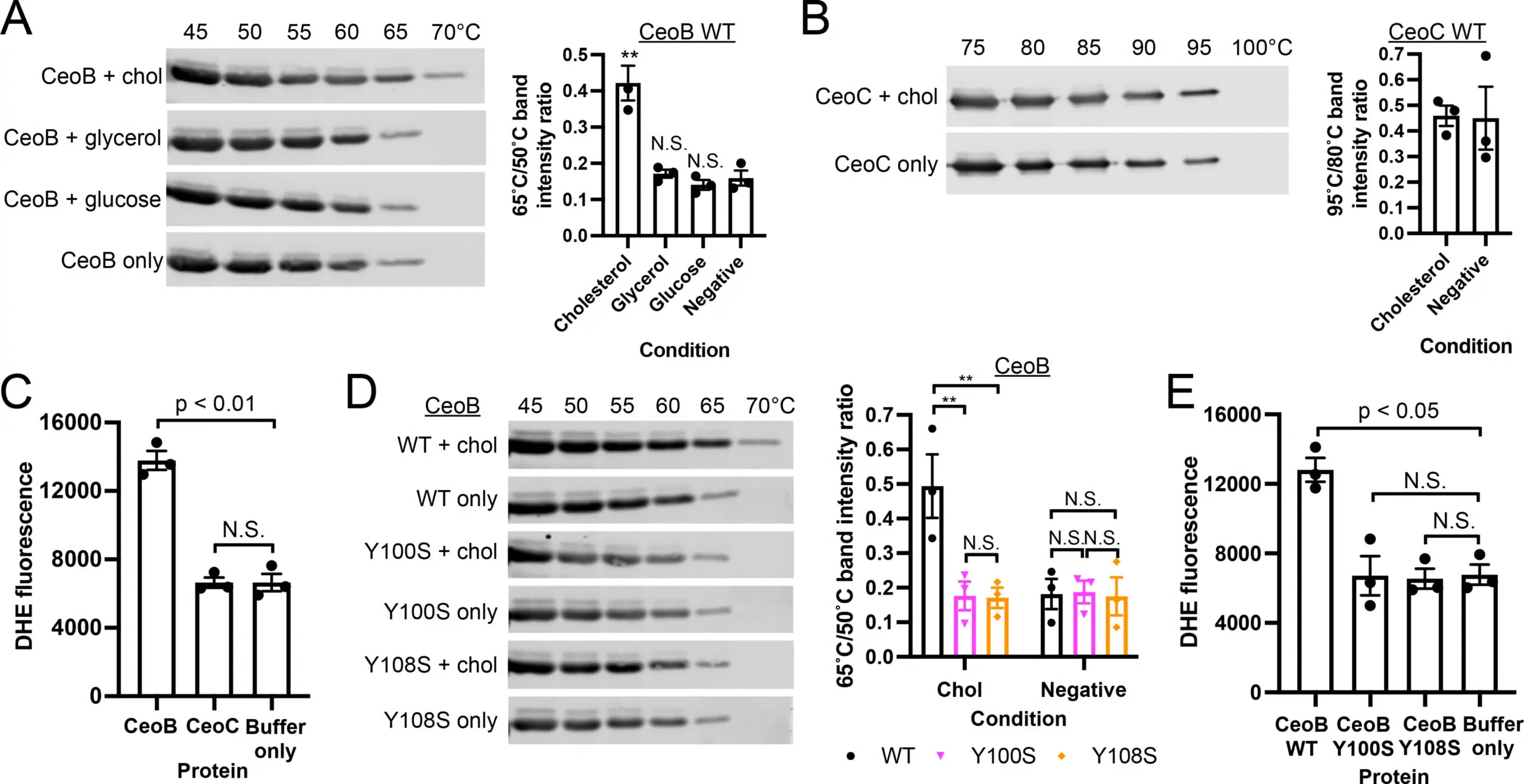
Potassium (K+) is the most abundant intracellular cation, but much remains unknown regarding how K+ homeostasis is integrated with other key bacterial biology aspects. Here, we show that K+ homeostasis disruption (CeoBC K+ uptake system deletion) impedes Mycobacterium tuberculosis (Mtb) response to, and growth in, cholesterol, a critical carbon source during infection, with K+ augmenting activity of the Mtb ATPase MceG that is vital for bacterial cholesterol import. Reciprocally, cholesterol directly binds to CeoB, modulating its function, with a residue critical for this interaction identified. Finally, cholesterol binding-deficient CeoB mutant Mtb are attenuated for growth in lipid-rich foamy macrophages and in vivo colonization. Our findings raise the concept of a role for cholesterol as a key co-factor, beyond its role as a carbon source, and illuminate how changes in intrabacterial K+ levels can act as part of the metabolic adaptation critical for bacterial survival and growth in the host.
Posted by
Levy CIMAR