

Multi-institutional retrospective study investigating blood culture protocols and test positivity in 701 dogs
Published
December 11, 2023
Source
Andrzej J Ogrodny, Rinosh Mani, Sarah M Schmid, Emily N Gould, Claire L Fellman, Ian DeStefano, Sarah Shropshire, Jillian M Haines, Timothy A Bolton, Sara A Jablonski, Nicole Jess, Harry Cridge
Abstract
Objectives: (i) To determine the influence of specimen collection protocol (timing and specimen quantity), primary disease process, and pre-existing antimicrobial or immunosuppressive therapy on blood culture (BC) positivity and (ii) To determine agreement between urine culture and BC results.
Animals: 701 client-owned dogs.
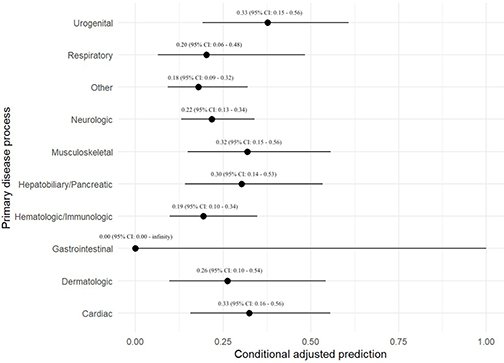
Methods: Multi-institutional retrospective study (2019-2022). Mixed-effect logistic regression was used to determine whether primary disease process, the number of BCs, or the timing of specimen collection was associated with BC positivity. Prediction plots were generated. Associations between urine culture and BC results were performed using logistic regression.
Results: Dogs with a positive urine culture were more likely to have a positive BC (OR: 4.36, 95% CI: 2.12-8.97, p = 0.003). Dogs that had three BC specimens had the greatest odds of obtaining a positive BC result (adjusted predictive value: 0.44, 95% CI: 0.21-0.70), although this was not significant. Isolates from 38.5% of dogs with a positive BC had resistance to ≥3 antimicrobial classes. The timing between specimen collection had no significant association with BC positivity. Pre-existing antibiotic or immunosuppressive therapy had no significant association with BC positivity.
Clinical relevance: Dogs with a positive urine culture were more likely to have a positive BC result.
Keywords
bacteria | fungi | MIC | septicemia | susceptibility
Posted by
Levy CIMAR